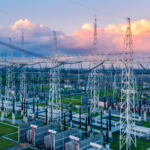
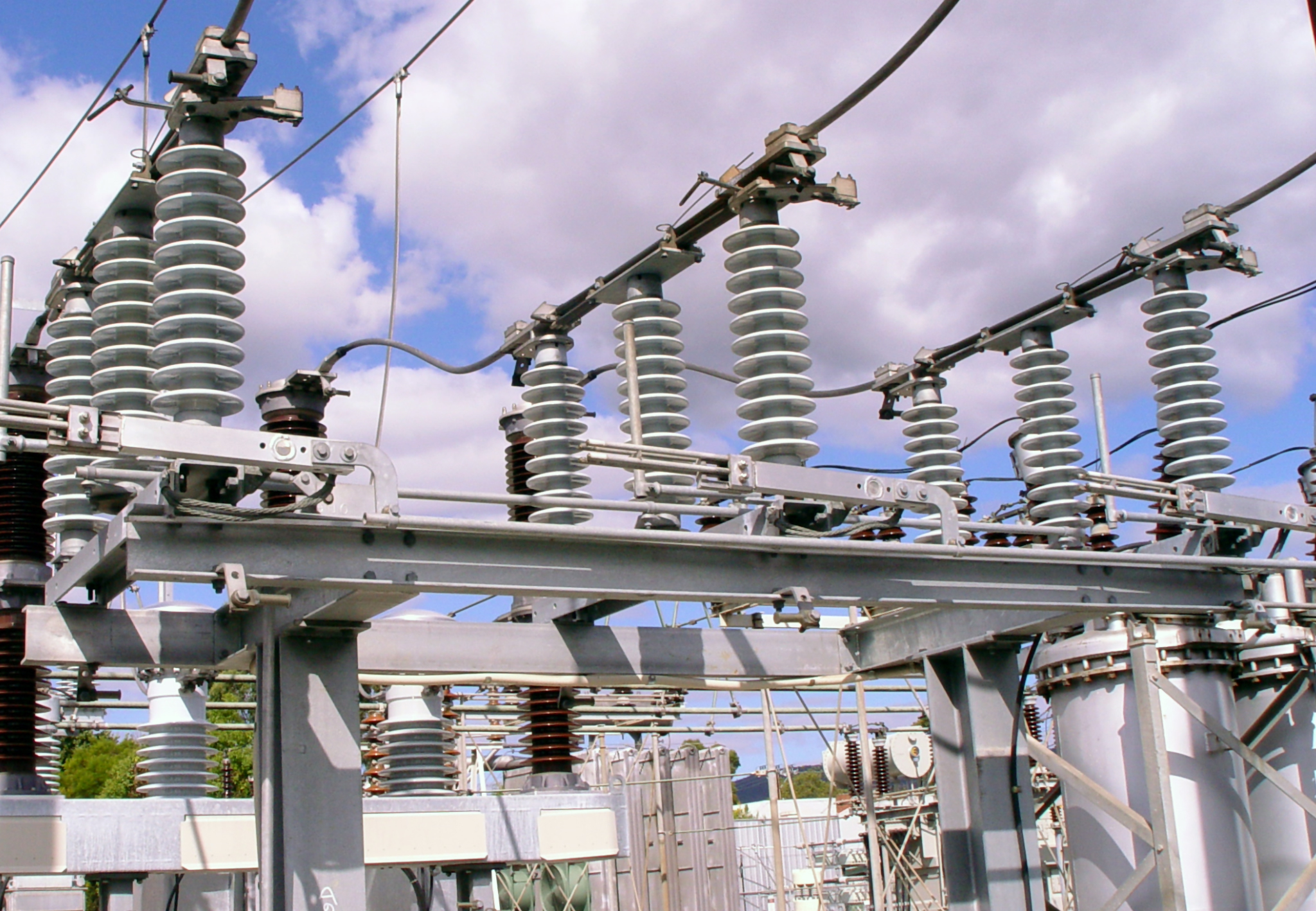
Substations are among the most critical assets in Australia’s electrical network. Whether supporting transmission, distribution, renewable energy generation, mining operations, or industrial facilities, a well-designed substation must deliver reliability, safety, and flexibility over a service life that can exceed 40 years.
While controlling project costs is an important objective, the lowest upfront cost doesn’t always represent the best long-term investment. Effective substation design requires balancing capital expenditure with operational performance, maintainability, future expansion, and lifecycle costs.
At Partum Engineering, we work closely with utilities, renewable energy developers, mining companies, and industrial clients to deliver practical, cost-effective substation designs that achieve both project budgets and long-term operational objectives.
Looking Beyond Initial Capital Costs
When evaluating substation costs, it’s easy to focus solely on procurement and construction. However, these represent only part of the total investment.
A well-designed substation should also minimise:
- Maintenance costs
- Operational interruptions
- Equipment replacement requirements
- Future upgrade costs
- Energy losses
- Construction risks
- Commissioning delays
Considering the full asset lifecycle during the design phase often delivers significant savings over decades of operation.
Optimising the Design from the Beginning
Cost-effective projects begin with informed engineering decisions during concept development.
Rather than simply replicating previous designs, engineers should assess the specific needs of each project, including:
- Required network capacity
- Future load growth
- Connection requirements
- Site constraints
- Environmental conditions
- Asset criticality
- Client operational preferences
By tailoring the design to the project, unnecessary complexity can often be eliminated without compromising performance or reliability.
Standardisation Where It Adds Value
Standardisation is one of the most effective ways to reduce engineering and construction costs.
Using proven design philosophies, standard drawing packages, and repeatable equipment layouts can provide benefits including:
- Reduced engineering hours
- Faster design approvals
- Simplified procurement
- Improved construction efficiency
- Easier maintenance
- Lower spare parts requirements
However, standardisation should not come at the expense of project-specific optimisation. The most successful projects combine standard engineering practices with solutions tailored to each client’s operational needs.
Selecting the Right Equipment
Equipment selection has a significant influence on both project costs and long-term performance.
Factors to consider include:
- Reliability
- Availability of spare parts
- Manufacturer support
- Operational life expectancy
- Maintenance requirements
- Whole-of-life cost
- Network compatibility
Choosing equipment solely on purchase price can result in increased maintenance costs, reduced reliability, or earlier replacement during the asset’s lifecycle.
Instead, engineers should evaluate equipment based on total value rather than initial cost alone.
Designing for Future Expansion
Electrical infrastructure rarely remains static.
Population growth, industrial development, renewable energy integration, and changing energy demands often require substations to expand over time.
Including provisions for future upgrades during the initial design can significantly reduce future capital expenditure.
Examples include:
- Reserved feeder bays
- Space for additional transformers
- Expandable protection systems
- Spare communications capacity
- Flexible bus arrangements
- Additional cable routes
- Scalable control building layouts
While these provisions may involve modest additional investment during construction, they can avoid major reconstruction projects later in the asset’s life.
Efficient Civil and Structural Design
Civil infrastructure represents a substantial proportion of substation construction costs.
Optimising elements such as:
- Earthworks
- Foundations
- Drainage
- Cable trenches
- Retaining structures
- Access roads
can produce significant project savings without affecting electrical performance.
Close collaboration between civil, structural, and electrical disciplines ensures opportunities for optimisation are identified early, reducing rework during detailed design and construction.
Reducing Construction Risk
Engineering decisions have a direct impact on construction efficiency.
Designs that simplify installation can reduce:
- Construction durations
- Site labour requirements
- Temporary works
- Safety risks
- Commissioning complexity
This may include prefabricated assemblies, modular control buildings, simplified cable routing, or standardised equipment layouts.
Reducing construction complexity often improves both project cost certainty and schedule performance.
Balancing Reliability and Cost
Every substation requires an appropriate level of redundancy based on its operational importance.
Critical infrastructure may justify:
- Duplicate protection systems
- Redundant communications
- Multiple transformer configurations
- Backup power supplies
- Higher equipment ratings
Conversely, over-specifying redundancy where it isn’t required can unnecessarily increase project costs.
Finding the right balance requires a thorough understanding of network performance requirements, operational risks, and client objectives.
Digital Engineering Improves Efficiency
Modern engineering tools enable designers to identify potential issues before construction begins.
Using digital design and coordination techniques allows project teams to:
- Detect clashes between disciplines
- Improve equipment layouts
- Optimise cable routing
- Reduce design revisions
- Enhance construction planning
- Improve documentation quality
These efficiencies reduce project risk while supporting smoother construction and commissioning.
Delivering Value Through Integrated Engineering
Cost-effective substation design depends on collaboration between multiple engineering disciplines.
Electrical, protection, civil, structural, telecommunications, and commissioning specialists all contribute to delivering an efficient and reliable outcome.
At Partum Engineering, our multidisciplinary team works collaboratively throughout the project lifecycle to identify opportunities for optimisation while maintaining compliance with Australian Standards, utility requirements, and client specifications.
By considering technical performance, constructability, maintainability, and lifecycle costs from the earliest stages of design, we help clients maximise the value of their investment.
Partner with Partum Engineering
Every substation project presents unique technical, operational, and commercial challenges. Achieving the right balance between budget and performance requires practical engineering experience, careful planning, and a focus on long-term value rather than short-term savings.
Partum Engineering delivers end-to-end substation design services across transmission, distribution, renewable energy, mining, industrial, and infrastructure projects throughout Australia. Our experienced team develops practical, efficient, and future-ready engineering solutions that reduce project risk, optimise lifecycle performance, and support reliable operation for decades to come.
Whether you’re developing a greenfield substation, upgrading an existing asset, or integrating new renewable energy infrastructure, Partum Engineering can help deliver a solution that meets both your budget and your performance objectives.