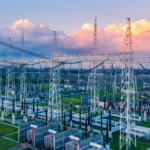
Automation plays a critical role in modern industrial and resource projects across Australia. From substations and renewable energy facilities to mining infrastructure and water treatment plants, automated systems enable safe, reliable, and efficient operations – particularly in remote and harsh environments where many Australian projects are located.
At Partum Engineering, automated system design is closely integrated with protection systems, SCADA, communications, and power system engineering to deliver complete, reliable operational solutions for clients in the energy, utilities, and resources sectors.
The Role of Automation in Industrial Facilities
Industrial automation systems are designed to monitor, control, and protect critical infrastructure. These systems typically bring together multiple engineering disciplines, including:
- Protection relays and control systems
- SCADA systems and operator interfaces
- Communication networks and telemetry systems
- PLC and RTU control systems
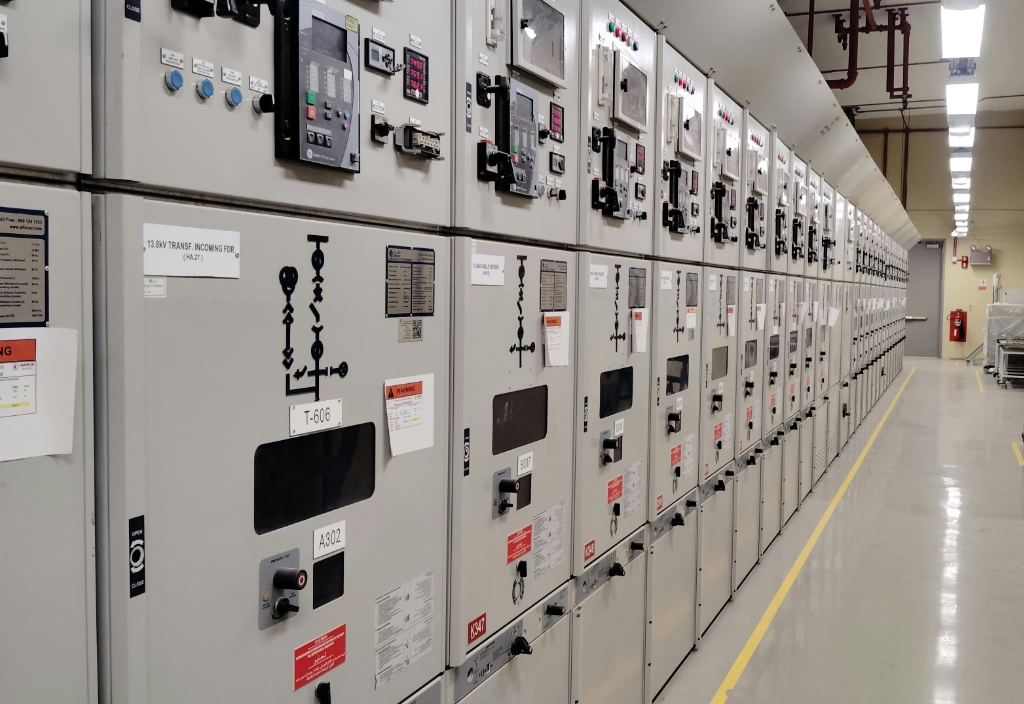
- Electrical power systems and switchgear
- Metering and monitoring systems
- Remote operations and control centres
Rather than operating as standalone systems, these components must be carefully integrated to ensure the facility operates safely, efficiently, and reliably.
Protection and Control System Integration
Protection systems are a critical part of automated industrial and electrical infrastructure. Protection relays, interlocking systems, and control schemes are used to detect faults and automatically isolate equipment to prevent damage and maintain system stability.
Automation design must consider:
- Protection relay coordination and settings
- Intertripping schemes
- Load shedding schemes
- Automatic transfer schemes
- Generator and transformer protection integration
- Interface between protection relays and SCADA systems
- Alarm management and event recording
Integrating protection systems into the broader automation and SCADA system ensures operators have full visibility of system events and can respond quickly to faults and abnormal operating conditions.
SCADA System Design and Integration
SCADA systems form the central control platform for most industrial and resource facilities. A well-designed SCADA system allows operators to monitor equipment status, control plant and equipment, review alarms and events, and analyse operational data.
Key SCADA design considerations include:
- Control system architecture
- HMI design and operator interface layout
- Alarm management and prioritisation
- Historian and data logging systems
- Remote access capability
- System redundancy and high availability
- Integration with PLCs, RTUs, and protection relays
- Integration with corporate and operational technology (OT) networks
In remote operations, SCADA systems are often connected to central control rooms located in major cities, allowing facilities to be operated without requiring full-time on-site personnel.
Communications and Telemetry Systems
Reliable communications systems are the backbone of any automated facility. Industrial and resource projects often rely on a combination of communication technologies, particularly in remote areas of Australia.
Typical communication systems include:
- Fibre optic networks
- Industrial Ethernet networks
- Serial communications (e.g. Modbus, DNP3, IEC 61850)
- Microwave and radio telemetry systems
- 4G/5G communications
- Satellite communications for remote sites
Communication system design must consider redundancy, latency, bandwidth, cybersecurity, and environmental conditions. Network architecture is particularly important in ensuring that protection, control, and SCADA systems operate reliably under all conditions.
Power System Integration
Automation systems must be designed with a strong understanding of the electrical power system they are controlling and monitoring. This is particularly important in substations, renewable energy facilities, and industrial power distribution systems.
Power system integration may include:
- Substation automation systems
- Generator control systems
- Load shedding and power management systems
- Metering and power quality monitoring
- Integration of renewable energy systems such as solar and battery storage
- Synchronisation and grid connection control
- Energy management systems
Close integration between power system engineers and control system engineers ensures the automation system supports the overall performance and stability of the electrical network.
Designing for Remote and Harsh Environments
Many Australian industrial and resource projects are located in remote areas with high temperatures, dust, moisture, and limited access to maintenance personnel. Automation systems must therefore be designed to be robust, reliable, and easy to maintain.
Design considerations for remote sites include:
- Redundant systems and communication pathways
- UPS and backup power supplies for control systems
- Environmental protection for panels and equipment
- Remote monitoring and diagnostic capability
- Cybersecure remote access for maintenance and support
- Standardised designs to simplify maintenance and spare parts management
These considerations are critical for reducing downtime and maintaining safe operation.
Cybersecurity and Operational Technology
As automation systems become more connected, cybersecurity is becoming increasingly important, particularly for critical infrastructure and energy projects.
Automation system design should include:
- Secure network architecture and segmentation
- Firewalls and secure remote access solutions
- User authentication and access control
- Security monitoring and logging
- Compliance with Australian cybersecurity frameworks and client standards
Cybersecurity is now a fundamental part of automation, SCADA, and communications system design – not an optional extra.
The Value of Integrated Engineering Design
One of the most important factors in successful automation projects is integration. Protection systems, SCADA, communications, and power systems cannot be designed in isolation. They must be developed as a coordinated system from the early design stages of a project.
An integrated engineering approach helps to:
- Reduce interface risks between systems
- Improve reliability and system performance
- Simplify commissioning and testing
- Reduce project delays and cost overruns
- Deliver a system that is easier to operate and maintain
This is particularly important on complex industrial, mining, energy, and infrastructure projects where multiple systems must operate together seamlessly.
Conclusion
Designing automated systems for industrial and resource projects in Australia requires a multidisciplinary approach that combines protection engineering, SCADA design, communications systems, and power system engineering. When these systems are designed and integrated correctly, they enable safer operations, improved reliability, reduced downtime, and better operational visibility.
For industrial, utilities, and resource sector projects, investing in well-designed and integrated automation systems is essential for delivering reliable, efficient, and future-ready infrastructure.
Partum Engineering provides engineering design services across protection, SCADA, communications, and power systems, delivering integrated automation solutions tailored to the needs of industrial and resource projects across Australia.