
As Australia’s energy network evolves, the demand for reliable, space-efficient, and sustainable substation solutions continues to grow. One of the first decisions in the design of a high-voltage substation is choosing between Gas-Insulated Switchgear (GIS) and Air-Insulated Switchgear (AIS) technologies.
Both systems perform the same core function – controlling, protecting, and isolating electrical equipment—but their design, footprint, and lifecycle characteristics differ significantly. Understanding these differences is key to selecting the right approach for your project.
What Are GIS and AIS Substations?
- Air-Insulated Substations (AIS):
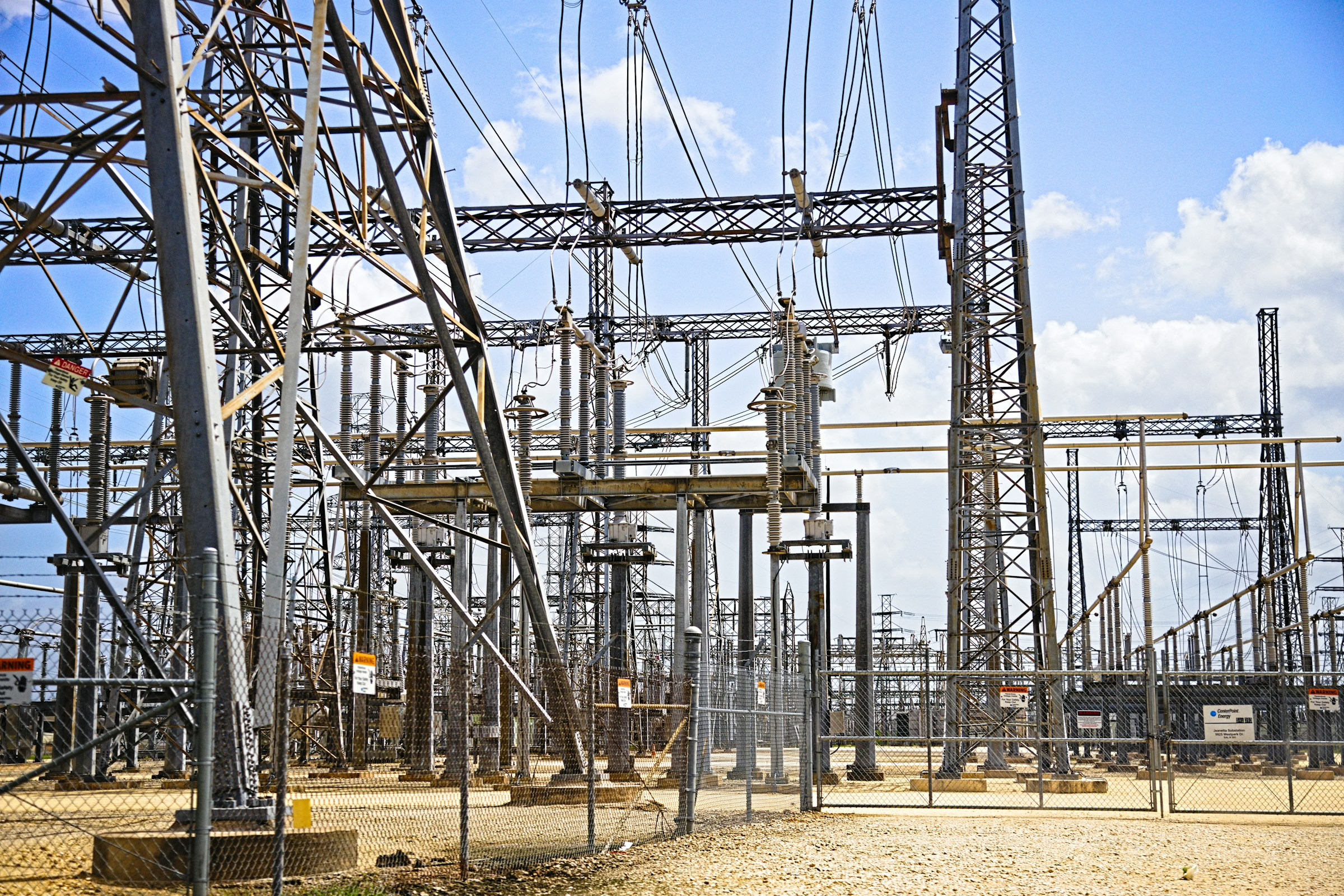
AIS are the traditional type of substations where electrical components are insulated using ambient air. Equipment such as circuit breakers, isolators, and busbars are installed in open yards or within simple enclosures. - Gas-Insulated Substations (GIS):
GIS use sulfur hexafluoride (SF₆) or alternative gases as the primary insulating medium. Electrical components are enclosed in sealed, grounded metal housings, resulting in a compact and highly reliable installation suitable for urban or space-constrained environments.
Key Differences Between GIS and AIS
| Feature | GIS (Gas-Insulated Substation) | AIS (Air-Insulated Substation) |
|---|---|---|
| Footprint | Compact – up to 70% smaller | Requires larger site area |
| Installation Location | Ideal for urban or indoor sites | Suited to rural or open spaces |
| Maintenance | Low – sealed system limits exposure | Higher – equipment is exposed to environment |
| Initial Cost | Higher capital expenditure | Lower initial cost |
| Reliability | High – less affected by weather, pollution, and wildlife | Moderate – performance depends on environmental conditions |
| Environmental Considerations | Involves greenhouse gas (SF₆); alternatives emerging | No gas emissions but larger land impact |
| Installation Time | Faster – modular, factory-tested units | Longer – requires more on-site assembly |
When to Choose GIS
GIS substations are particularly advantageous in the following situations:
- Urban and industrial sites where space is at a premium.
- Harsh environmental conditions (e.g., coastal, dusty, or polluted areas).
- Projects requiring high reliability and minimal maintenance, such as critical infrastructure and renewable energy interconnections.
- Underground or indoor installations, where noise and visual impact need to be minimised.
While GIS involves higher upfront costs, the long-term savings in maintenance and reduced downtime often offset the investment over the asset’s life.
When to Choose AIS
AIS substations remain the preferred choice for:
- Rural or remote sites where land is available and inexpensive.
- Utility-scale transmission substations requiring straightforward layouts and easy accessibility.
- Projects with tight budget constraints or low anticipated environmental exposure.
- Sites where future expansion is expected, as AIS configurations are easier to modify.
AIS continues to offer a practical, cost-effective solution across much of Australia’s transmission and distribution network, particularly where space and environmental factors are not limiting.
Sustainability and Future Trends
One of the major challenges facing GIS technology is the environmental impact of SF₆ gas, a potent greenhouse gas. However, industry innovation is rapidly addressing this through SF₆-free technologies, using alternative insulating gases such as g³ (green gas for grid) and dry air.
As Australia moves toward decarbonisation and more compact substation designs for renewable integration, hybrid GIS–AIS solutions are also gaining traction. These configurations combine the compactness of GIS with the flexibility and cost advantages of AIS, offering the best of both worlds for many modern grid projects.
Choosing the Right Substation for Your Project
Selecting between GIS and AIS is not a one-size-fits-all decision. The optimal choice depends on:
- Available space and site conditions
- Voltage level and system reliability requirements
- Budget constraints
- Maintenance capabilities
- Environmental and community considerations
At Partum Engineering, our multidisciplinary team specialises in the concept, design, and delivery of both GIS and AIS substations across Australia. We assess each project’s technical, spatial, and operational needs to recommend a solution that ensures long-term performance, safety, and cost efficiency. Get in contact with the Partum team to discuss your next project.
Whether you’re planning a compact urban GIS installation or a large rural AIS yard, making an informed decision early in the design phase can significantly influence project success.
With the right engineering partner, you can balance cost, performance, and sustainability, ensuring your substation design supports the reliable delivery of electricity to Australia’s growing energy network.