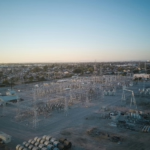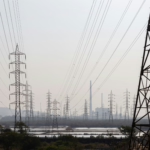
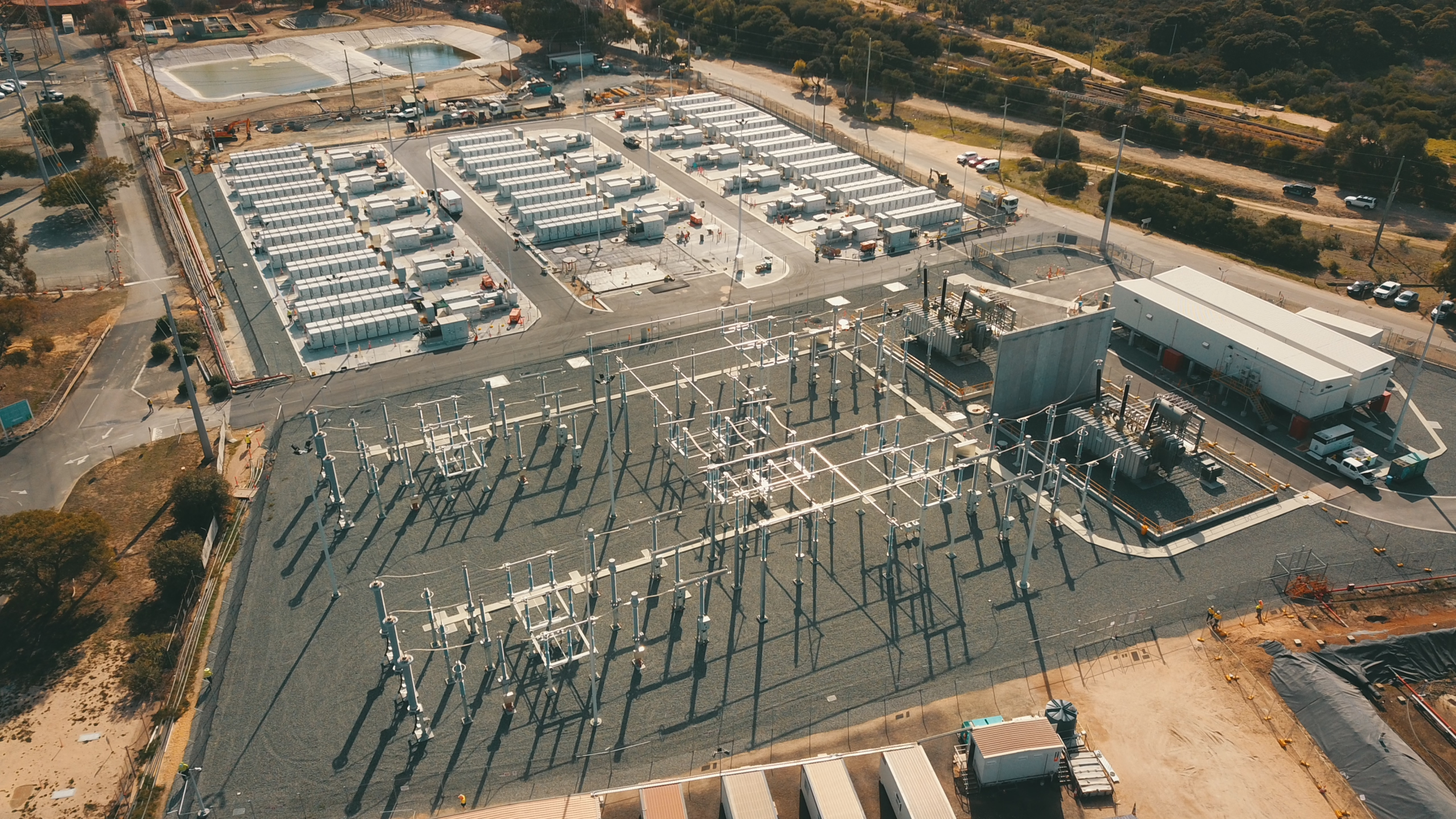
Australia’s energy transition is redefining the function and design of high-voltage substations. No longer limited to voltage transformation and protection, modern substations now serve as the critical interface between renewable generation, energy storage systems, and the transmission and distribution network.
To meet the technical challenges of this transition, substation designs must accommodate variable and distributed generation, two-way power flow, complex protection requirements, and increasingly stringent compliance obligations.
Evolving Context of Substation Design
Traditional substation design was based on predictable, unidirectional power flow from synchronous generation sources. In contrast, renewable generation introduces intermittency, geographic dispersion, and inverter-based characteristics that impact fault levels, voltage control, and system stability.
These factors require engineers to rethink design philosophies around grid strength, earthing systems, reactive power management, and control system integration. Compliance with the National Electricity Rules (NER) and AEMO’s connection and performance standards is now a fundamental design driver, particularly under the Generator Performance Standard (GPS) process.
Technical Design Considerations
1. System Flexibility and Expansion Capacity
Given the dynamic nature of renewable project development, substations must be designed with scalability in mind. This involves adopting modular layouts, provision for future transformer bays, and flexible busbar arrangements such as breaker-and-a-half or double bus configurations.
Where footprint constraints exist (common in renewable hubs) Gas-Insulated Switchgear (GIS) offers a compact, low-maintenance alternative, with reduced exposure to environmental factors such as dust and humidity.
2. Integration of Renewable and Hybrid Systems
Hybrid projects combining solar PV, wind, and Battery Energy Storage Systems (BESS) require sophisticated secondary system design. Substations serving these facilities must manage dynamic export limits, frequency response, and grid-support functions through advanced control and communication architectures.
Integration of Supervisory Control and Data Acquisition (SCADA), Remote Terminal Units (RTUs), and Protection Relays must ensure seamless coordination between generating units, inverters, and network operators, maintaining compliance with AEMO’s operational visibility and control requirements.
3. Protection and Automation Design
Protection schemes in renewable substations must account for reduced fault current contribution from inverter-based resources. This limits the effectiveness of traditional overcurrent-based protection, necessitating the use of distance, differential, and voltage-based schemes with adaptive settings.
Digital substations implementing IEC 61850 GOOSE messaging and Sampled Values (SV) are increasingly deployed to enhance reliability, interoperability, and fault response time. Automation systems must also integrate with utility-grade communications for SCADA, event reporting, and remote maintenance diagnostics.
4. Power Quality and System Stability
With increasing inverter penetration, maintaining voltage stability and power quality at the Point of Common Coupling (PCC) is essential. Substations may require reactive power compensation devices such as STATCOMs, SVCs, or capacitor/reactor banks to manage voltage fluctuations and support system strength.
Additionally, harmonic filtering and precise voltage control are critical to ensure compliance with AS/NZS 61000 standards and network harmonic limits. Proper coordination between the substation’s reactive plant, inverter controls, and grid support functions is essential to prevent oscillatory instability.
5. Earthing and Step/Touch Voltage Compliance
Renewable substations, often located in high-resistivity or remote areas, require detailed earthing system analysis to achieve safety compliance under AS/NZS 7000 and IEEE 80. Studies such as Earth Potential Rise (EPR) and Step/Touch Voltage Assessment must consider soil resistivity variation, fault levels, and the presence of metallic return paths.
6. Cybersecurity and Digital Resilience
The adoption of digital substations and remote operation introduces cybersecurity risks that must be addressed at design stage. Compliance with ISO 27001 and utility cybersecurity frameworks requires robust segmentation of control networks, encrypted communication, and secure authentication protocols for all connected devices.
7. Sustainability and Lifecycle Efficiency
As environmental performance becomes a procurement criterion, substation designs increasingly incorporate low-loss transformers, reduced SF₆ gas volume or alternative insulation technologies, and recycled construction materials. Lifecycle design principles, covering maintenance access, remote diagnostics, and end-of-life recycling, enhance long-term sustainability and asset performance.
Integrated Engineering Approach
Delivering technically robust renewable substations demands a multidisciplinary approach encompassing primary and secondary electrical, civil and structural, and protection, SCADA and communications engineering.
At Partum Engineering, our team applies deep experience across substation design, grid connection studies, and protection coordination to deliver compliant, cost-efficient, and future proof designs for renewable developers and network operators.
Through close collaboration with AEMO, NSPs, and client engineering teams, we ensure that every design meets both performance standards and project delivery requirements, enabling reliable integration of renewable energy into Australia’s evolving grid.
Substations are the technical backbone of the renewable energy era. Designing them for flexibility, interoperability, and digital resilience is key to ensuring grid stability as renewable penetration grows. With the right engineering expertise and design philosophy, substations can serve as intelligent gateways, balancing renewable variability with grid reliability, and enabling a smarter, more sustainable energy network for the future.