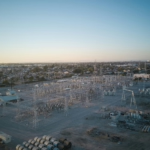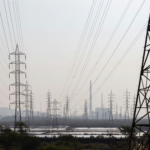
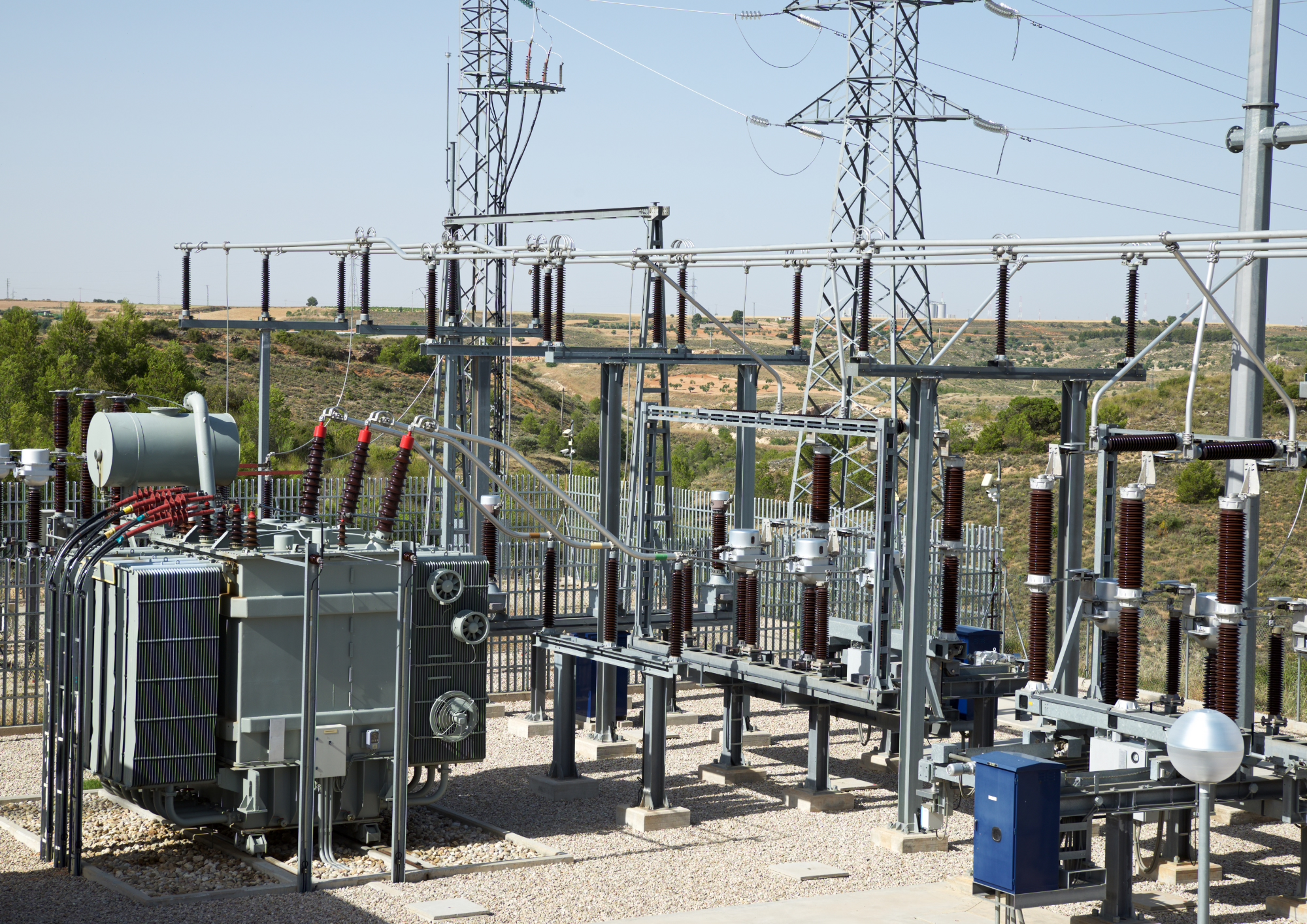
Across Australia’s energy and infrastructure sectors, asset owners are placing increasing emphasis on maintainability in engineering design. Whether it’s a high-voltage substation, renewable energy facility, or industrial power system, the long-term performance of an asset is determined not only by how well it’s designed and constructed, but by how easily it can be maintained, inspected, and upgraded over its operational life.
For asset owners, maintainability directly influences operational reliability, lifecycle cost, safety, and network availability. As networks expand and infrastructure ages, engineering teams must prioritise design decisions that simplify maintenance and reduce long-term operational risks.
In this article, we explore what asset owners across Australia value most when it comes to maintainable infrastructure design and how engineers can integrate these priorities into their projects.
The Shift Toward Lifecycle-Focused Engineering
Traditionally, engineering design has often prioritised capital cost and construction efficiency. However, asset owners today are increasingly adopting a lifecycle approach, recognising that operational and maintenance costs can far exceed initial capital expenditure over the lifespan of an asset.
A well-designed asset should allow operators to:
- Perform maintenance safely and efficiently
- Access equipment without disrupting operations
- Replace components with minimal outage time
- Adapt infrastructure to future network requirements
This shift has placed greater responsibility on design teams to consider maintainability from the earliest stages of project development.
Accessibility and Safe Equipment Layout
One of the most consistent priorities for asset owners is physical accessibility. Equipment that is difficult to access or requires complex shutdown procedures can significantly increase maintenance time, cost, and safety risks.
Effective design should consider:
- Clear working spaces around primary and secondary equipment
- Safe access pathways for technicians and maintenance vehicles
- Adequate lifting and handling provisions for heavy components such as transformers and switchgear
- Ergonomic placement of control panels and protection relays
By designing layouts that facilitate safe and efficient access, engineers help reduce downtime and improve maintenance productivity.
Standardisation Across Assets
Asset owners often manage large portfolios of infrastructure across multiple sites and regions. As a result, they place high value on standardisation.
Standardised design elements can include:
- Protection schemes and relay configurations
- Control panel layouts and labelling conventions
- Equipment types and specifications
- Cable routing and termination methods
Standardisation simplifies training, maintenance procedures, and spare parts management. It also allows asset owners to deploy consistent maintenance strategies across their networks.
Designing for Future Upgrades and Network Growth
Australia’s energy networks are undergoing rapid transformation due to:
- Increased renewable generation
- Distributed energy resources
- Electrification of transport and industry
- Changing grid stability requirements
As a result, maintainable infrastructure must also be adaptable.
Forward-thinking designs consider:
- Space allocation for additional feeders or bays
- Modular equipment configurations
- Spare capacity in cable trenches and conduits
- Flexible protection and control systems
This approach enables asset owners to upgrade infrastructure without major redesigns or costly rebuilds.
Minimising Outages During Maintenance
For utilities and industrial operators, unplanned outages can have significant financial and operational impacts. Asset owners therefore prioritise designs that enable maintenance without disrupting operations wherever possible.
This may involve:
- Redundant protection and control systems
- Sectionalised switchgear configurations
- Bypass arrangements for critical equipment
- Isolation points that allow safe maintenance while maintaining system availability
Design strategies that reduce outage requirements help asset owners maintain reliability and meet service obligations.
Clear Documentation and Digital Asset Integration
Maintainability extends beyond physical design, it also includes information management.
Accurate documentation is essential for safe and efficient maintenance throughout an asset’s lifecycle. Asset owners increasingly expect engineering consultants to deliver:
- High-quality as-built drawings
- Clear equipment labelling and identification systems
- Structured asset data compatible with digital asset management platforms
- Comprehensive operation and maintenance documentation
These deliverables ensure that future maintenance teams can quickly understand system configurations and perform work with confidence.
Collaboration with Asset Owners During Design
One of the most effective ways to ensure maintainability is through early collaboration with asset owners and operators.
Maintenance teams often possess valuable insights into the practical challenges of maintaining infrastructure. Incorporating their feedback during the design phase can help identify potential issues before construction begins.
Key collaborative activities include:
- Design reviews with operations and maintenance personnel
- Maintainability workshops during early project stages
- Constructability and operability assessments
- Lessons learned from previous projects
This collaborative approach leads to designs that better reflect real-world operational requirements.
The Role of Engineers
Engineers play a critical role in ensuring that infrastructure is designed with maintainability in mind. This requires balancing multiple considerations, including safety, cost, regulatory compliance, and future network needs.
Experienced engineering teams bring value by:
- Applying best practices from similar projects across the energy sector
- Integrating maintainability principles into layout, equipment selection, and protection design
- Identifying risks that could affect long-term maintenance efficiency
- Delivering clear and structured engineering documentation
By prioritising maintainability, companies like Partum Engineering help asset owners achieve greater reliability, reduced operational costs, and improved asset performance over time.
Designing for Long-Term Value
Infrastructure assets across Australia are expected to operate for 30 to 50 years or more. Designing for maintainability ensures that these assets remain safe, reliable, and cost-effective throughout their lifecycle.
For asset owners, the most valuable engineering designs are not simply those that meet immediate project requirements, they are those that support efficient operation and maintenance for decades to come.
As Australia’s energy networks continue to evolve, maintainability will remain a key priority for asset owners seeking resilient, adaptable, and future-ready infrastructure.
Get in touch with Partum Engineering to discuss how we can help with your project design challenges.